

You Don’t Have To Figure Out Where To Start Alone.
The Legally Women Foundation helps women navigate Texas family courts through structured preparation, organization, and education before attorney consultations, hearings, and other critical stages of your Texas Family law case.
The Preparation Gap
FY2025: 94,325 (PEOPLE facing court without counsel) cases
A nearly 15% increase in just two years.
90% of civil legal problems experienced by low-income households with children received no or insufficient legal help.
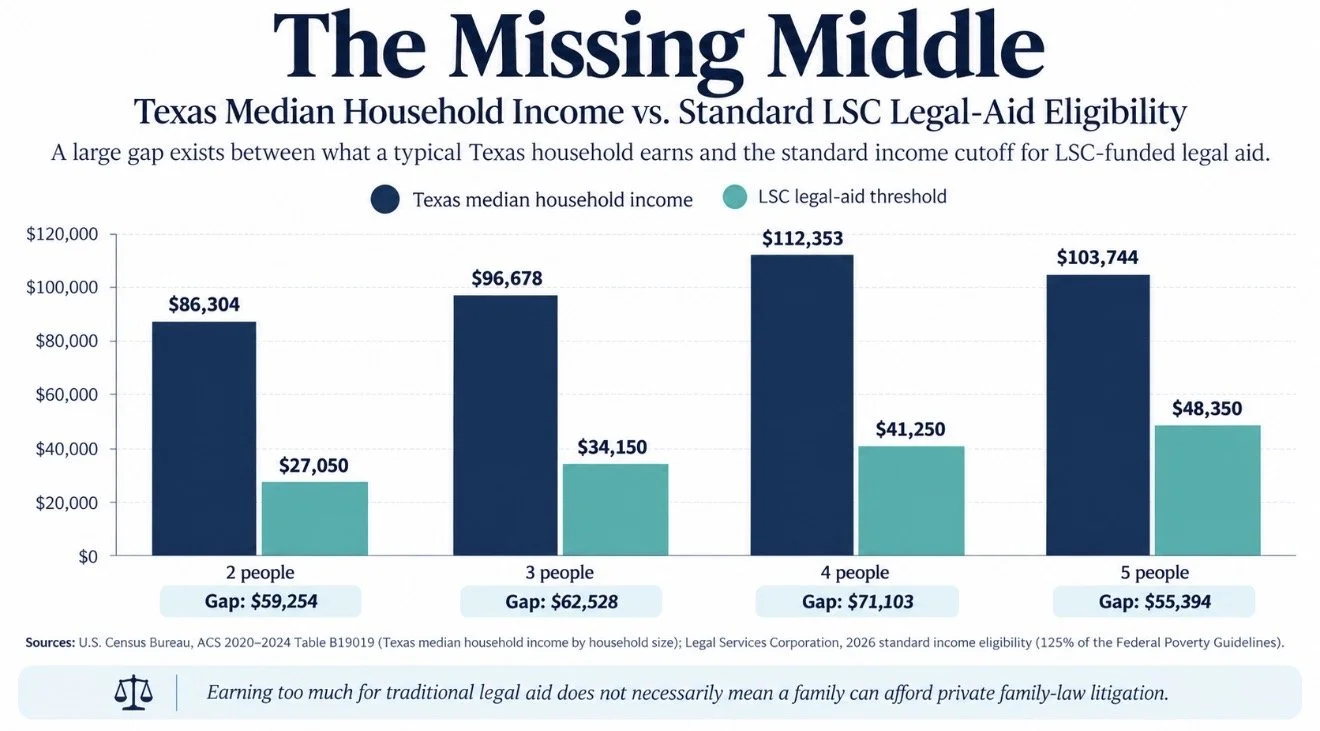
Low-Income civil legal aid in Texas, the most common bench mark is tied to the Federal Poverty Guidelines.
The data points to a clear need: more Texans are entering family court without representation, many families face barriers to legal aid, and a significant middle-income gap remains. The Legally Women foundation addresses the space between access and readiness in the family court process. The justice gap is not only about access to an attorney. It is also about access to preparation.
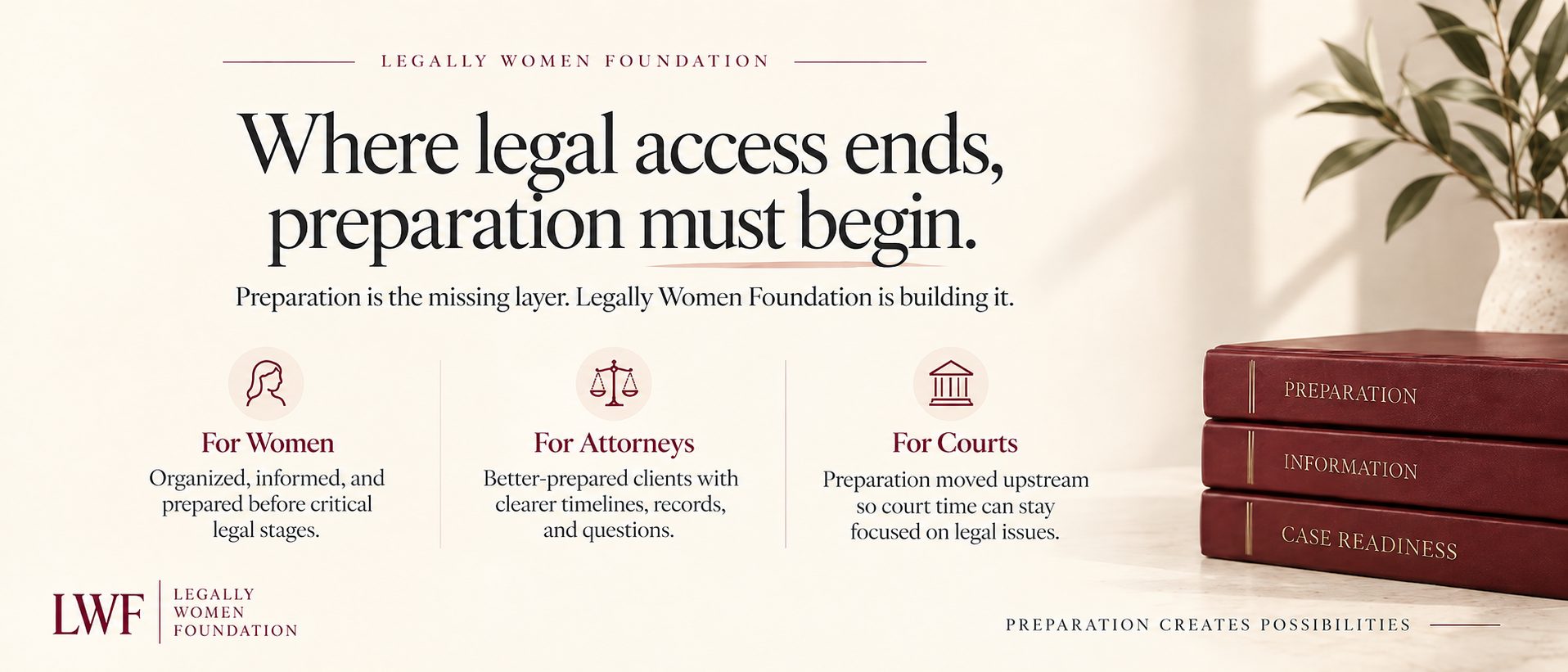
LWF is building a new layer of support within the Texas family-court ecosystem by helping women see the starting point in their Texas family court case and understand where to begin and how to prepare. LWF guides women to become more organized, informed, and prepared before critical decisions, consultations, hearings, and court appearances.
We do not replace attorneys or the courts. We help women arrive prepared to work within the justice system with attorneys, self- representation (Pro-Se) program, and the courts. Better prepared litigants support a more effective family-court system. For attorneys that can mean more efficient intake and prepared clients. That can make consultations more productive, and let legal professionals spend more of their time on legal analysis and strategy rather than filtering basic organization. For judges and court staff, the benefit is different. A prepared self-represented litigant may be more likely to understand court expectations and bring relevant information to court. Texas Commission Report said large numbers of self-represented litigants can consume court personnel time, clog courts, create delays, and increase the risk that cases turn on technical errors rather than merit. The National Center for State Courts makes the same broader point nationally: well supported self help programs can improve court efficiency by improving filings, reducing reliance on clerks, and preparing litigants before they arrive in court.
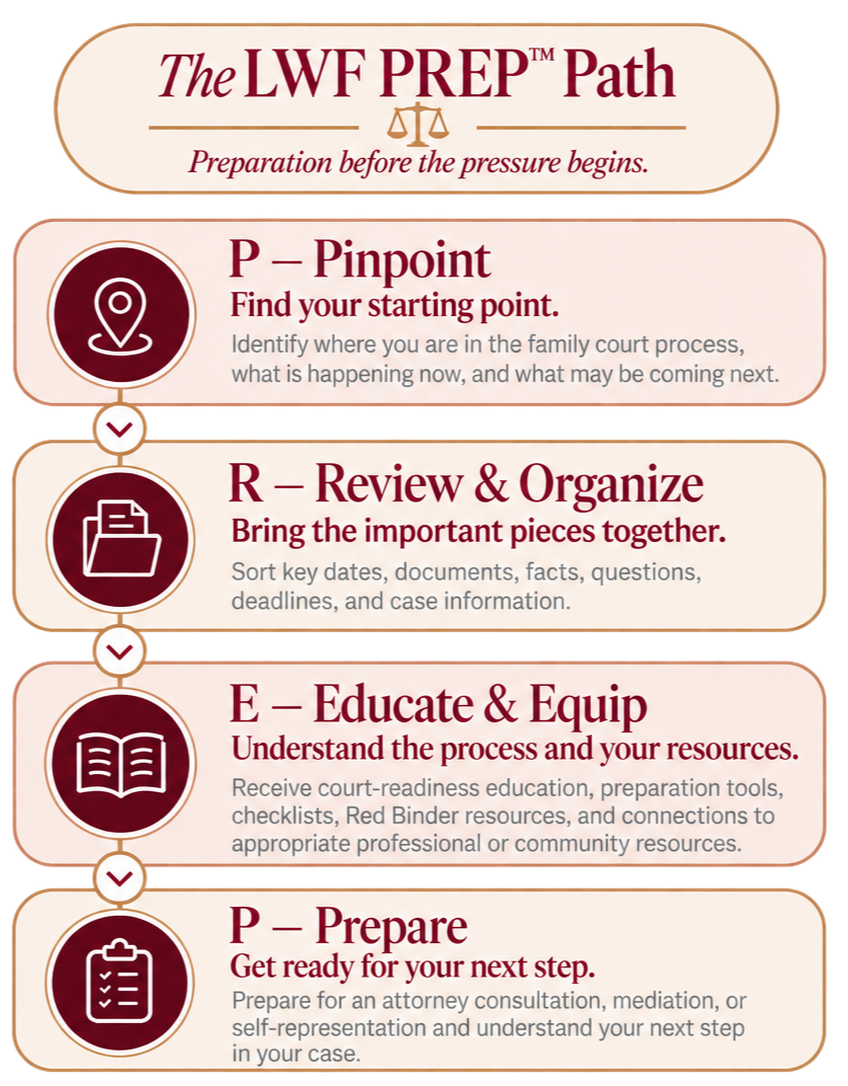
The LWF PREP™ Path
The LWF PREP™ Path

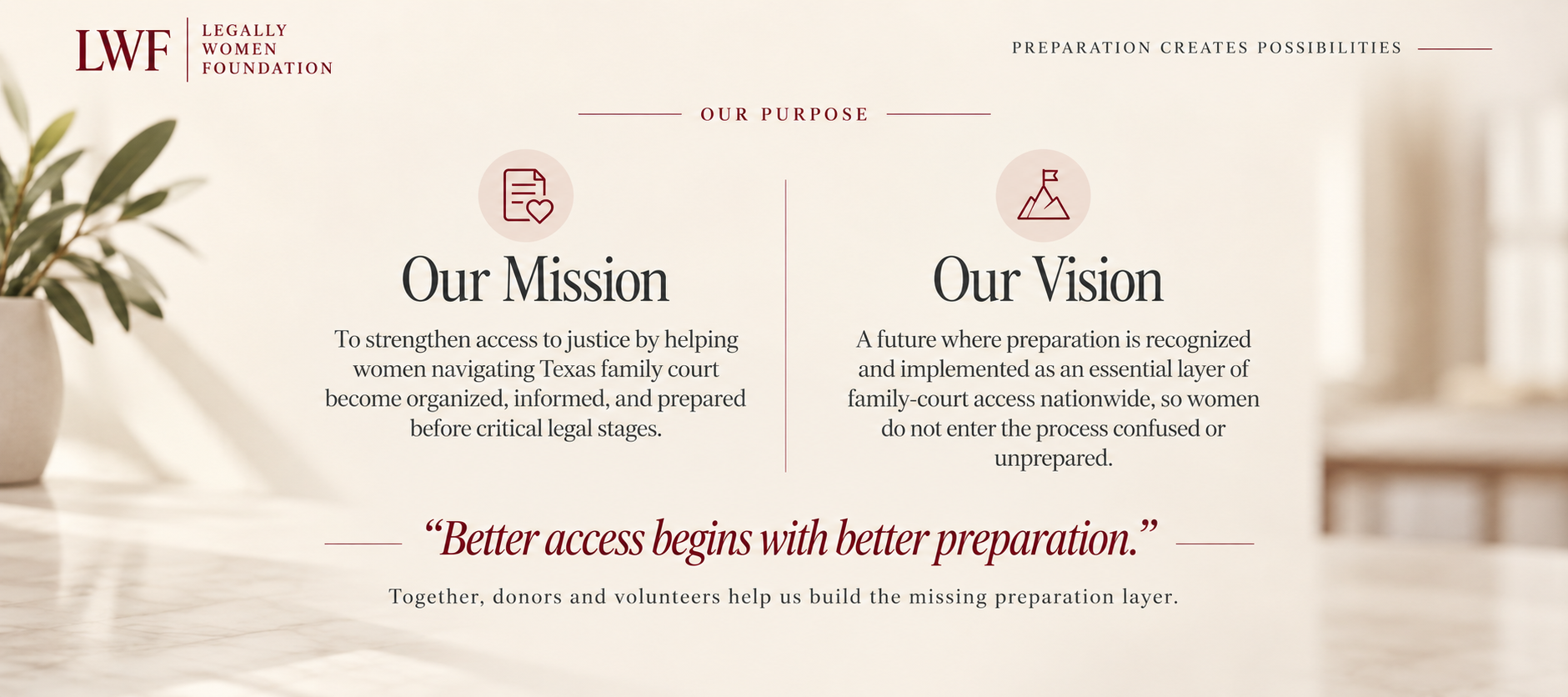
“Better access begins with better preparation.”
Join the Mission
Whether you want to volunteer, partner, sponsor, or support our work, we’d love to hear how you want to get involved!